A $7.60 OBD2 Scanner: Honest Review of a Surprisingly Useful Tool
Can a $7.60 OBD2 scanner actually read engine fault codes reliably? I looked into it. Here's my honest take.
Save $7.91 on this deal!
⏰Offer valid for a limited time!
🛒Buy now on AliExpress🔒 Secure payment on AliExpress • Price may change
📋 Detailed description
The check engine light came on. The shop wanted $90 just to tell me why.
It's one of the more frustrating moments of car ownership — that amber glow on your dashboard that could mean anything from a loose gas cap to an imminent engine failure. I've been there. You go to the shop, they plug in a device for thirty seconds, tell you it's a fault code, and hand you a bill before they've even done anything.
That specific frustration is what makes OBD2 scanners worth thinking about. The technology has been standardized across every car sold in the US and Europe since 1996 — the port is the same, the protocol is the same, and the fault codes are largely universal. Which means the question isn't whether a cheap scanner can read them. It's whether a $7.60 one can do it without being completely useless.
I looked into this one from AliExpress carefully. Here's my honest take.
What You're Actually Getting
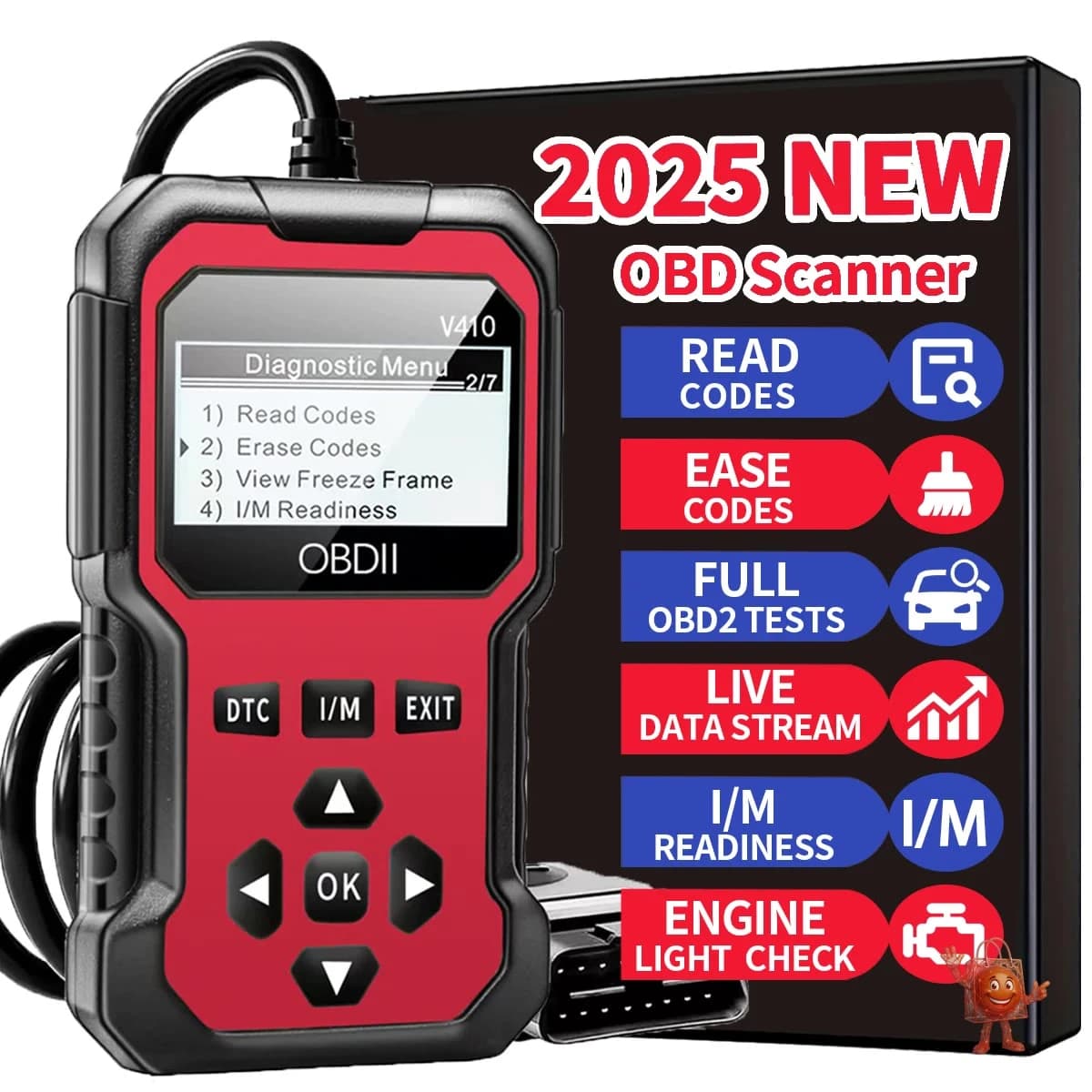
This is a standalone OBD2 scanner — meaning it has its own small screen and doesn't rely on your phone or Bluetooth. You plug it directly into the OBD2 port under your dashboard, it powers on using the car's own power, and it starts reading data.
The core function it claims — and what the reviews confirm — is reading and clearing engine diagnostic trouble codes (DTCs). That's the P0XXX codes that trigger your check engine light. It also shows live data: engine RPM, coolant temperature, vehicle speed, and a handful of other real-time parameters depending on the car.
Compatibility is the honest strength here. OBD II protocol has been mandatory on US vehicles since 1996 and European cars since 2001. If your car falls in that window, this scanner should connect and communicate. One reviewer in France used it to clear an airbag warning on a Ford Fiesta. Another in Spain cleared a fault on a Seat León with a BKD diesel engine. A US reviewer confirmed it worked on a 2012 Mitsubishi Montero without issues.
Worth noting that the device apparently supports multiple languages — which is a practical detail that separates it from some budget alternatives that are English-only.
The Real Pros — and the Honest Con
What surprised me about the reviews is the consistency. These aren't planted five-star summaries — they're specific. People naming the car model, the fault code, whether it worked. That kind of specificity is hard to fake at scale.
For the price, the practical value is real: you can diagnose a check engine light yourself, decide whether it's urgent before spending money at a shop, and clear the code after a repair without paying a technician to plug in a device for thirty seconds.
Now the limitation, stated plainly: this is a basic scanner, and basic means something. It handles standard OBD II engine codes. It is not a professional diagnostic tool. Advanced functions — ABS diagnostics, airbag module programming, transmission-specific tests, bidirectional controls — are not reliably supported on most vehicles at this price. If you drive a modern European car with proprietary systems, or if you need to do anything beyond reading and clearing engine codes, this tool will leave you short. That's not a criticism of the product — it's a category boundary. A $7.60 scanner should not be compared to a Launch or Autel unit at $200+.
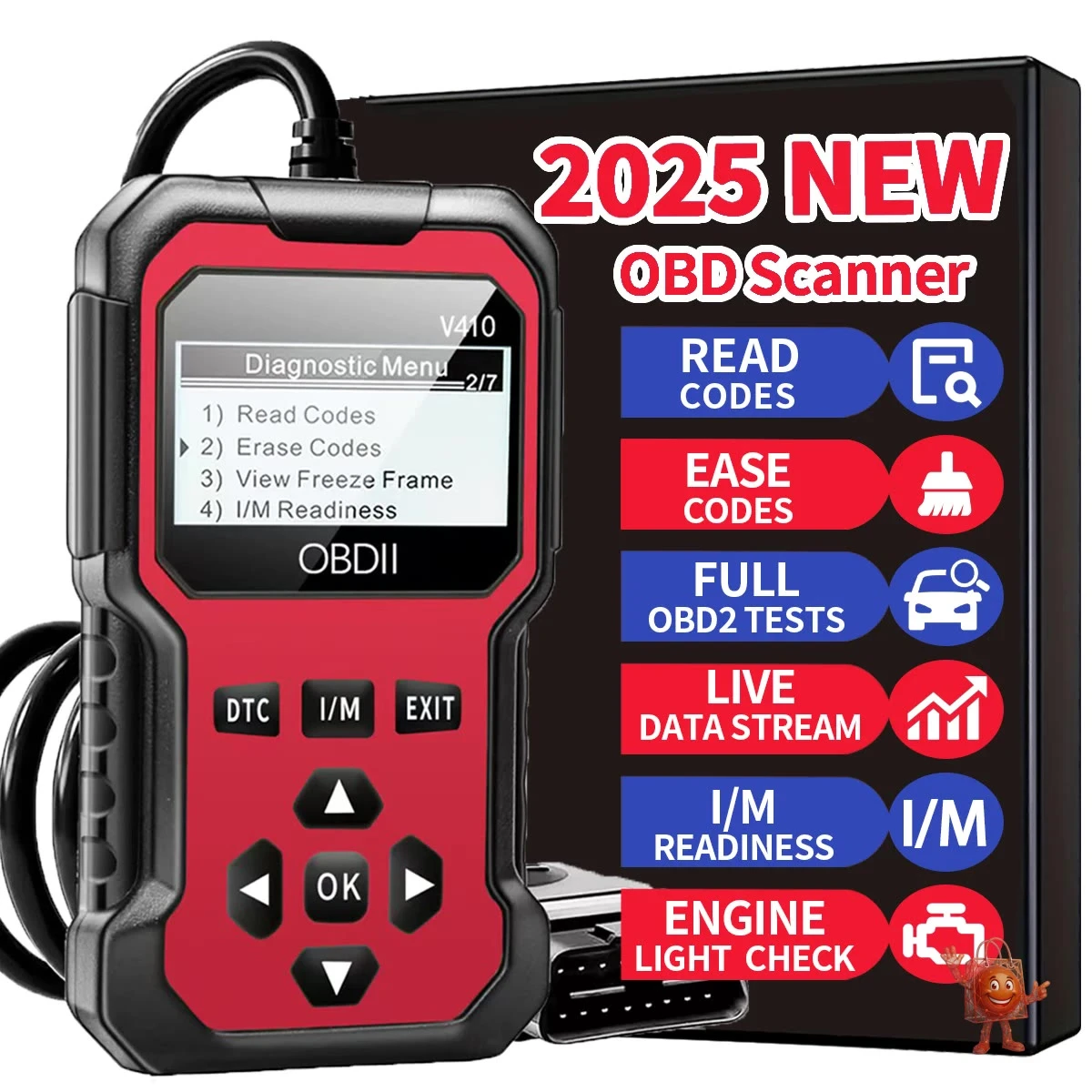
The screen is also small and basic. No app, no Bluetooth, no data export. It does one thing and does it adequately.
What Would You Normally Get at This Price?
At $7.60, the realistic alternatives in the OBD2 space are: nothing reputable. Bluetooth OBD2 dongles for phone apps start around $10-15 and introduce the variable of app quality — some work well, some are terrible, and you're dependent on your phone battery and app compatibility. Entry-level branded handheld scanners from Innova or Autel start around $30-50.
So in context, this sits at a price point where there genuinely is no credible branded alternative. If it works — and the evidence suggests it does for basic use — it occupies a category basically alone.
The comparison that matters is not scanner vs. scanner. It's scanner vs. paying a shop $60-90 to read a code once. If you own a car made after 1996 and you've never had an OBD2 scanner, you've probably overpaid for that service at least once already.
Buy It If... / Skip It If...
Buy it if you want to know what your check engine light means without going to a shop, if you own any car made between 1996 and today, if you do basic DIY maintenance and want to clear codes after fixing a sensor or replacing a part, or if you want a glove box tool for emergencies on road trips.
Skip it if you need professional-grade diagnostics for ABS, airbag, or transmission systems, if you work on modern European cars with complex proprietary protocols, or if you want Bluetooth and phone integration — there are better tools for those use cases, just not at this price.
My honest verdict: at $7.60, the risk is low and the potential utility is real. It's not a professional tool and it doesn't pretend to be. But for a first-time OBD2 scanner for everyday car ownership, it does the one thing that matters — tells you what's wrong — and that's worth more than what it costs.
Price: $7.60 (was $15.49)
Check it out here: https://www.ali-ex.com/cZZYi3
🔥 Similar products you might like
More quality products from the same category