A $2 Voltage Tester That Actually Works - Honest Review
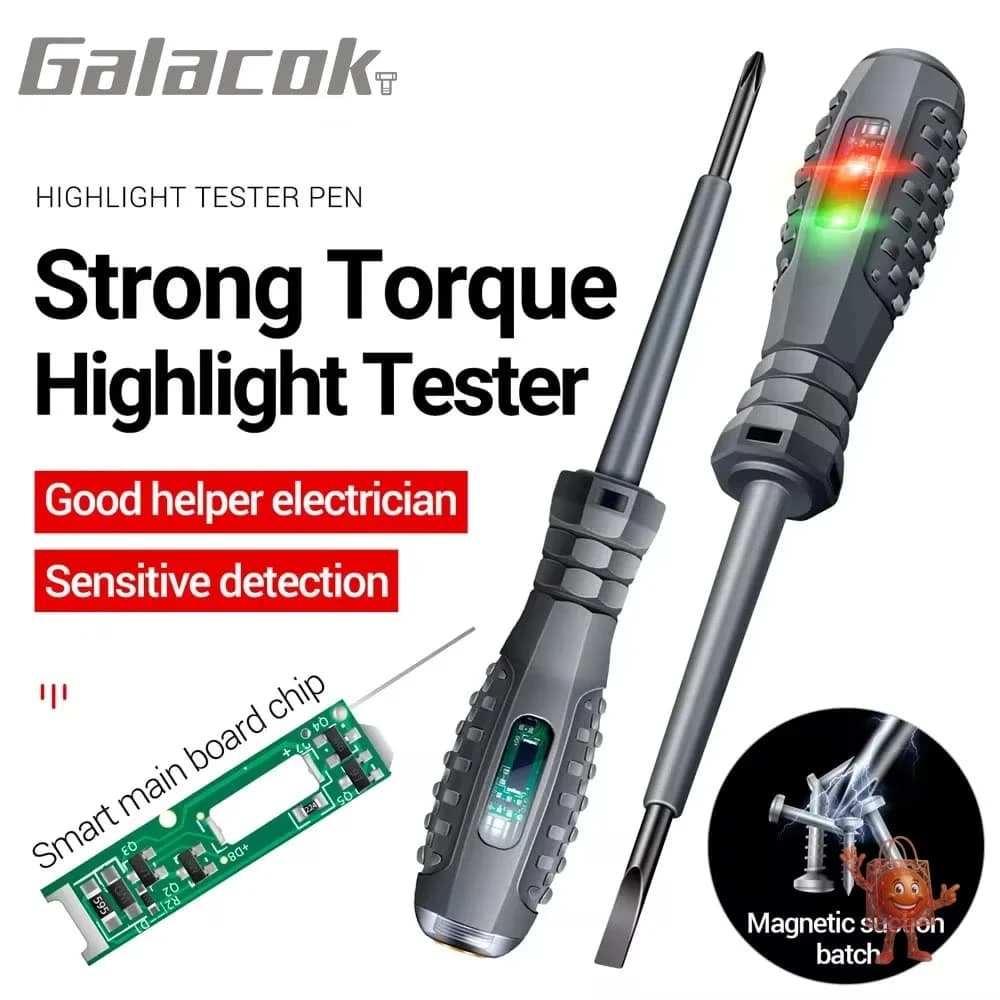
This non-contact voltage tester screwdriver detects live wires without touching them - for $2.
Save $2.28 on this deal!
⏰Offer valid for a limited time!
🛒Buy now on AliExpress🔒 Secure payment on AliExpress • Price may change
📋 Detailed description
The Problem With Electrical Safety on a Budget
Most people doing basic home electrical work fall into one of two camps: they either own a decent multimeter they barely know how to use, or they just guess and hope for the best. Neither is great. There is actually a middle ground - a simple voltage tester that tells you whether a wire is live before you touch it. I looked into this one because it costs about $2 and has real reviews from buyers across Europe. Here is my honest take.
What This Thing Actually Does
This is a non-contact voltage tester built into the body of a screwdriver. It detects AC voltage in the 70V to 600V range without requiring you to touch the wire directly. The LED indicators - red and green - tell you what you are dealing with. Red means live voltage. Green with your finger placed on the top of the handle helps indicate phase versus neutral. No exposed contacts, no probes to fumble with.
What surprised me reading through the verified buyer reviews is how consistently people mention the sensitivity. A buyer from Slovakia noted it detects live cables from several centimeters away without any contact. An Italian buyer confirmed it reliably identifies live sockets and cables with clear, visible LED signals. A Spanish buyer specifically walked through the phase-versus-neutral detection function and found it accurate. For a $2 tool, that level of consistent positive feedback across multiple countries is worth noting.
The body doubles as an actual screwdriver - Phillips or flat head depending on which variant you order - so it is not purely a tester. That combination is genuinely useful if you are working in a tight space and do not want to swap tools.
The Real Pros and the Real Con
The genuine strengths here are the non-contact detection and the phase identification function. These are the two things that matter most when you are doing basic electrical checks at home. You approach a cable, the LED lights up red, you know it is live. You do not need to strip anything or connect probes. That simplicity has real value for someone who is not an electrician but also does not want to guess.
The limitation is equally real and worth stating clearly: this is not a precision instrument. It gives you a visual go or no-go signal - it does not give you a voltage reading. It is not rated to CAT III or CAT IV safety standards, which matters if you are working on anything beyond standard residential wiring. For professional electricians working on industrial or three-phase systems, this is not the right tool. The sensor sensitivity, while an asset in most situations, also means it can occasionally detect nearby fields from adjacent wiring. That is a minor annoyance but worth knowing.
What Does $2 Usually Buy You?
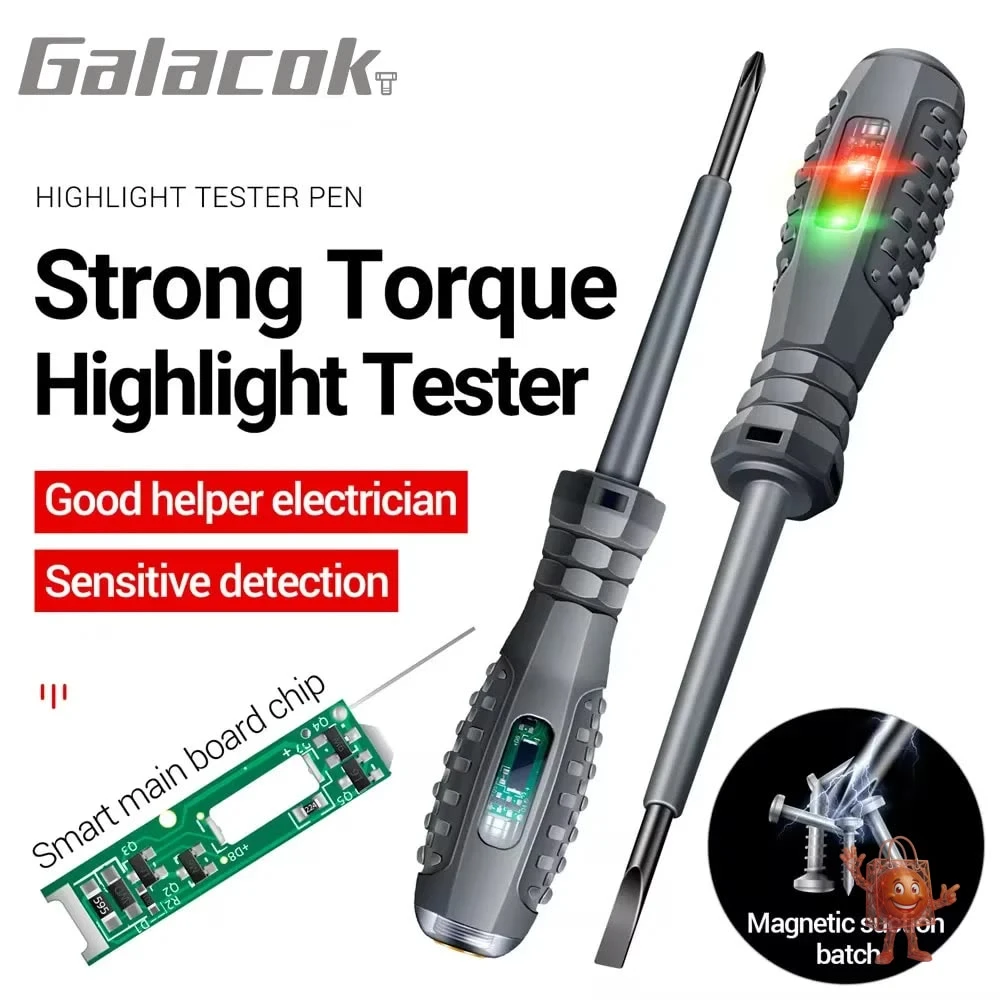
Honestly, almost nothing useful in the electrical tools category. A basic non-contact voltage tester from a recognized brand at a hardware store runs $15 to $30. The budget testers you find in discount bins for $5 to $8 are usually single-function and have no phase detection. This one, at roughly $2 shipped, has two functional modes, a solid build based on buyer reports, and more than 3,000 orders with a 4.6 rating. That does not make it a professional instrument, but it does make it a legitimate option for the specific use case it is designed for.
For context, the category it competes with most directly is the cheap single-LED voltage pens you see at checkout counters. This is noticeably more capable than those.
Buy It If / Skip It If
Buy it if:
- You do occasional home electrical work and want a fast, safe way to check if a wire or outlet is live.
- You want a low-cost backup tester to keep in a toolbox.
- You need to identify phase and neutral without a multimeter.
- You are buying a few at once - at this price, having one in multiple locations (garage, workshop, home) makes sense.
Skip it if:
- You are a licensed electrician working on commercial or industrial installations.
- You need certified safety ratings for professional compliance.
- You need actual voltage measurements rather than a live or dead indication.
- You are buying it as a primary tool for serious electrical work.
My honest take: this is a legitimate, useful tool for a very specific purpose. It does not oversell itself, and within its actual function it delivers. At $2, the decision is not really whether it is worth it - it clearly is for home use - but whether it fits your actual needs. For most people doing basic electrical checks at home, it does.
Check the current price and buy here: https://www.ali-ex.com/YOaBqn
🔥 Similar products you might like
More quality products from the same category